
Why Wolves Still Have Something to Teach Us
Long before they became figures of fear, wolves were recognized by human cultures as teachers and companions. The science and the stories now emerging from a sanctuary in Southern California suggest that relationship is not as lost as we as

Around forty thousand years ago, curious wolves began drawing closer to human encampments – not to attack, but to scavenge on the margins of the hunt.
Over millennia, that proximity deepened. Some of those wolves eventually evolved into the first domesticated dogs, a process largely complete by fourteen thousand years ago. What remained – the wolf in the forest, alert at the edge of the firelight – continued to share landscape with human communities in a relationship that most indigenous cultures across North America and Eurasia understood not as threat but as instruction.
Wolves, in their world view, were teachers: social, relational, attuned. It took a particular strand of European medieval thinking to convert that understanding into something else entirely.
Church doctrine and then the folk tradition of the fairytale rewrote the wolf as a creature of menace, and the rewriting was thorough. By the 1500s, European kings were offering bounties. Farming communities pursued wolves across the continent for generations. France, a country that had shared landscape with the species since the earliest human habitation, saw its last wild wolf disappear in the early twentieth century.
The American story ran roughly parallel: systematic poisoning and hunting campaigns removed grey wolves from the lower 48 states almost entirely by the 1960s. The ecological cost of that removal was not fully measured until decades later.
When grey wolves were reintroduced to Yellowstone in 1995, the consequences extended well beyond what most scientists had anticipated. As wolf numbers increased, elk behavior shifted. Riverbanks stabilized as grazing pressure reduced. Vegetation recovered in areas that had been stripped bare. The structural health of an entire ecosystem changed from a single reintroduction – a demonstration of what ecologists call a trophic cascade, the chain of effects that flows through a landscape when its apex predator returns.
The principle is now well established: wolves do not simply live in an ecosystem; they organize it. Their absence had taken their ecological logic with it. The cultural dimension of that estrangement – what it means to have systematically erased a species we co-evolved with – has been slower to examine.
That is the territory Wolf Connection occupies. Founded by youth counsellor and former soldier Teo Alfero, the sanctuary sits on 165 acres within the national forest roughly forty miles north of Los Angeles. It rescues wolves and wolfdogs from fur farms, roadside zoos and private owners who acquire wolves as pups and discover, as the animals mature into their full nature, that domestic life and wolf biology are incompatible. The facility currently holds 32 wolves. But rescue is only part of what Wolf Connection does.
Its program is backed by local governments and developed over more than a decade, bringing young people from the California justice system, foster care and under-resourced schools into structured encounters with the pack. The therapeutic logic is grounded in a theory Alfero has articulated with increasing precision: that humans carry a memory of their connection with wolves at a level of mammalian biology that predates social conditioning.
“The primal connection with wolves is down here at the level of us as mammals,” he has said. The wolves, undomesticated and incapable of performance, reach beneath whatever armor a young person has built around themselves. That is not a metaphor. It is, according to a growing body of program data, measurable.
As conservation science works to restore wolves to landscapes from which they were removed, Wolf Connection is exploring a parallel question: what is required to restore the relationship for the humans too. The two-part nature wildlife documentary Remaking Wolf Connection goes inside the sanctuary during a significant period of expansion and follows the people and wolves at the heart of the work.
For viewers encountering Wolf Connection for the first time, the program does something that documentaries about wildlife rarely manage as directly: it asks what the human side of this relationship actually needs.
Join the Ecoflix community and watch Remaking Wolf Connection
External Links
Wolf Conservation Center
IUCN Wolf Specialist Group
First published in the Ecoflix newsroom.
More in Conservation
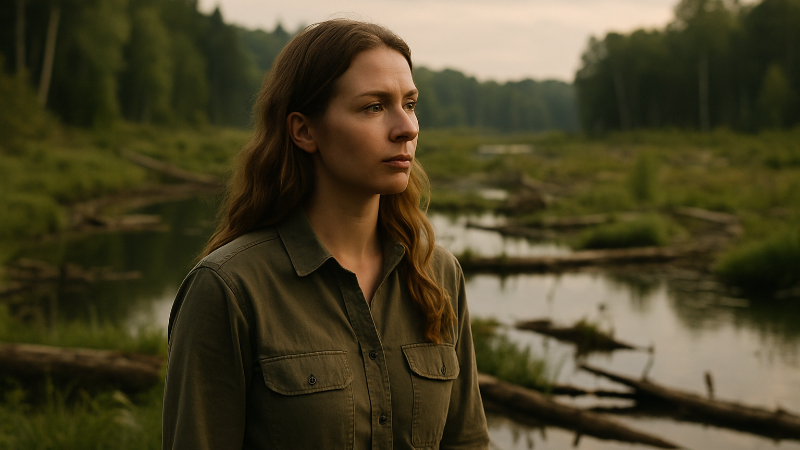
Why Nature Is Now a Climate Strategy
This week marks World Environment Day 2026, themed Inspired by Nature. Behind the slogan is a growing body of evidence that restored ecosystems are among the most powerful climate tools available — and some of the least used.
Read feature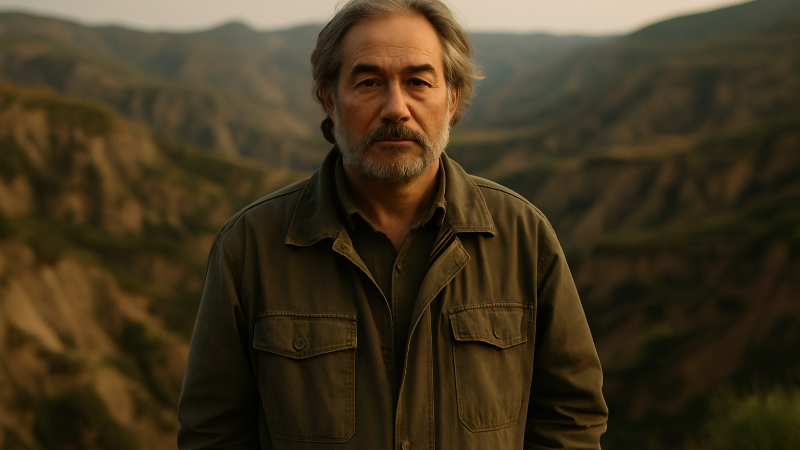
What 35,000 Square Kilometres Can Teach Us
In the 1990s, China's Loess Plateau was the most eroded place on Earth. What happened next is one of the most documented and significant acts of ecological recovery ever recorded — and its lessons apply far beyond China's borders.
Read feature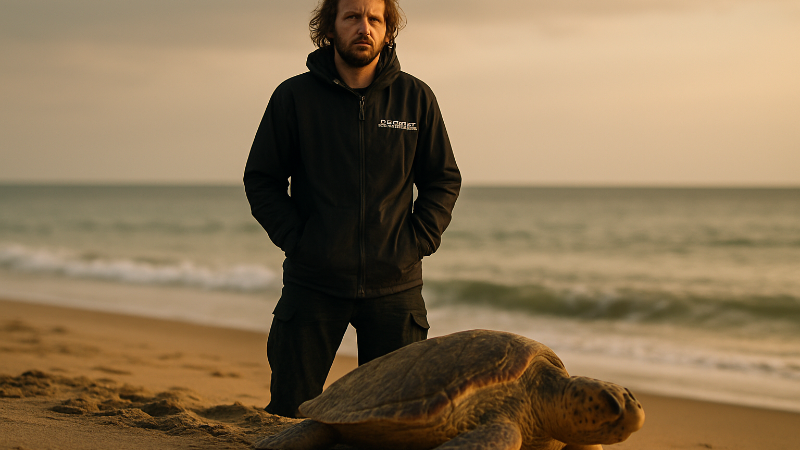
The Activists Holding Ocean Destroyers to Account
From Grenada's reefs to the killing bays of the Faroe Islands, the front line of ocean protection is held by a small number of organizations willing to go where others do not. What they find there is both troubling and clarifying.
Read feature