
The Activists Holding Ocean Destroyers to Account
From Grenada's reefs to the killing bays of the Faroe Islands, the front line of ocean protection is held by a small number of organizations willing to go where others do not. What they find there is both troubling and clarifying.
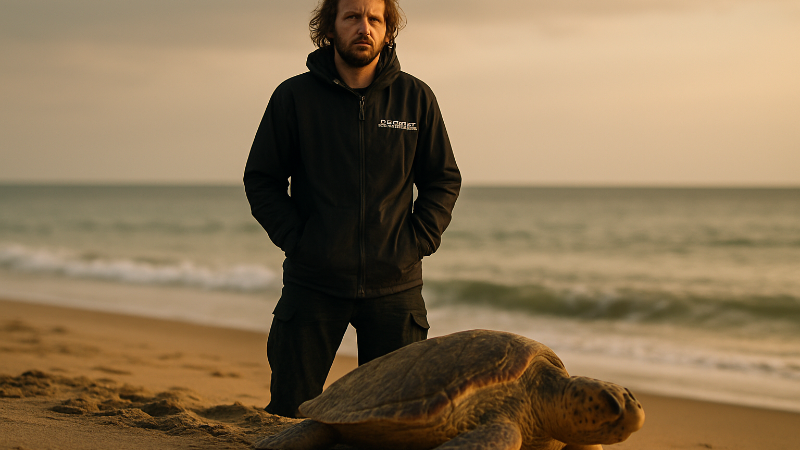
The sea turtle, for all its symbolic weight, is one species in an ocean under pressure from every direction.
The nesting beach threats and bycatch figures that frame the conservation challenge for turtles are part of a wider pattern: industrial fishing operating beyond sustainable limits, marine ecosystems absorbing the consequences of production systems built for profit rather than the ocean's carrying capacity, and wildlife that has no legal standing and limited political advocacy.
The activists and organizations who document what happens in the places most people do not see represent something that data alone cannot: accountability.
The Faroe Islands offer a concentrated version of the tensions running through ocean governance globally. The grindadráp, the traditional practice of driving pilot whales and dolphins into one of 26 authorised bays to be killed, has become one of the most documented points of conflict in marine conservation.
Neptune's Pirates UK, the sole NGO with a consistent operational presence on the islands since 2016, conducts annual documentation campaigns. In 2021, a volunteer filmed the killing of 1,423 Atlantic white-sided dolphins in a single drive — footage that reached international audiences and generated sustained political pressure.
The organization's vessels are now legally banned from Faroese waters, a restriction that underlines both the sensitivity of their presence and the seriousness with which the Faroese authorities treat continued scrutiny.
The waters around the Faroe Islands carry other pressures less visible than the grind. Salmon farming now accounts for half of Faroese fish exports and has nearly tripled in tonnage since 2000.
The environmental cost of that expansion is documented in the film: fjord-floor dead zones created by fish excrement, sea lice treated with toxic chemicals, and the death of 50 million lumpfish annually in Norway as part of the biological pest-control system protecting farmed salmon.
On the commercial fishing side, the Faroe Islands unilaterally increased their mackerel quota by 50 per cent in 2021, claiming 19.6 per cent of the total allowable catch at a level that their own scientists acknowledged could push the fishery toward collapse.
The editorial line from one of the film's subjects is worth holding: "It's certainly the easiest threat to stop. You don't decide to stop global warming. You don't decide to stop overfishing. You can decide to stop the grindadráp."
That framing applies well beyond the Faroe Islands. The most damaging practices in ocean governance share one characteristic with each other: they are decisions, not inevitabilities.
Bycatch is a decision about gear design and fishing area. Habitat destruction is a decision about coastal development priorities. The death of millions of hatchlings because of light pollution on nesting beaches is a decision about what kind of infrastructure we build and where.
There is a consequence to inaction that the Faroe Islands document with unusual clarity. Pilot whale meat has been declared unfit for human consumption. Children in the Faroe Islands carry the highest concentration of methylmercury poisoning of any group of children in the world — the direct result of a food practice intersecting with ocean pollution the Faroese themselves did not cause.
The ocean's contamination comes back to the communities most dependent on it. It is, as a model of consequence, as applicable to the fishing communities of the Caribbean as it is to the North Atlantic.
Far Away Islands: Neptunes Pirates, available now on Ecoflix, documents the investigative work of a film crew and conservation activists across a full year of engagement with the Faroe Islands. It is not a comfortable watch, and it is not designed to be.
The Ecoflix Foundation supports ocean and wildlife conservation through more than 65 NGO partners worldwide. Every donation goes directly to those partners, with nothing taken for overhead. Watching the film is a start. Supporting the work behind it is how it continues.
Support the Ecoflix Foundation and its NGO partners. Every donation goes directly to the field. Join at watch.ecoflix.com
First published in the Ecoflix newsroom.
More in Conservation
Why Nature Is Now a Climate Strategy
This week marks World Environment Day 2026, themed Inspired by Nature. Behind the slogan is a growing body of evidence that restored ecosystems are among the most powerful climate tools available — and some of the least used.
Read feature
What 35,000 Square Kilometres Can Teach Us
In the 1990s, China's Loess Plateau was the most eroded place on Earth. What happened next is one of the most documented and significant acts of ecological recovery ever recorded — and its lessons apply far beyond China's borders.
Read feature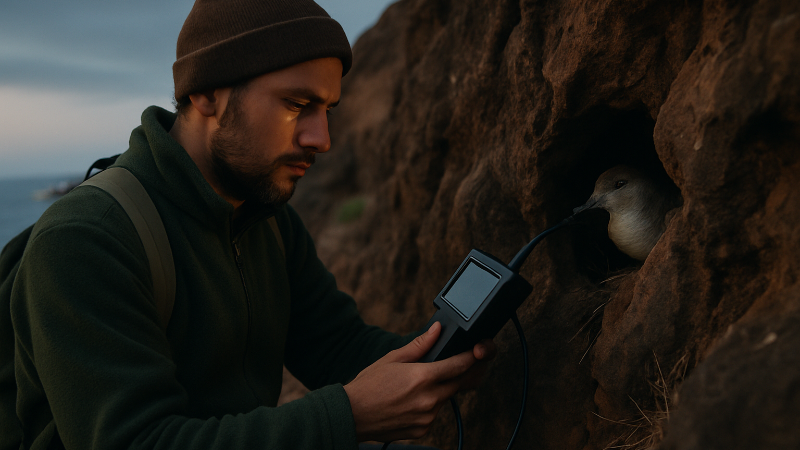
How Darkness Became a Conservation Tool
The science behind seabird rescue is more intricate than it looks from the street. From acoustic monitoring to GPS-tracked releases and tunable LED systems dimmed after midnight, the field methodology is reshaping how conservationists think about light, time and the design of coastal towns.
Read feature