
Why Restoring Ecosystems Means Rebuilding Economies
Healthy ecosystems do far more than protect wildlife. As ecologist Thomas Crowther argues, restoring damaged landscapes with the right native species can strengthen climate resilience, improve livelihoods and reshape how governments and bus

The modern environmental crisis is often described in separate parts: climate change in one column, biodiversity loss in another, economic development somewhere else entirely. Yet in ecological reality those divisions do not exist. Forests regulate rainfall that supports agriculture. Soil organisms determine whether land remains fertile. Pollinators sustain food systems that entire economies depend upon. Remove one layer and the effects travel quickly through many others.
That interdependence sits at the centre of Thomas Crowther’s work. At ETH Zurich, where he leads the Crowther Lab, his research has repeatedly shown that ecosystems function as living networks rather than collections of isolated species. The loss of one species is rarely an isolated event. It alters nutrient cycles, food chains, carbon storage and often the economic security of the people living closest to the change.
This is why her argues in Reconsidering Ecosystems that ecological restoration has become more than a conservation objective. It is increasingly viewed as infrastructure.
Across degraded landscapes, restoration is often still imagined as a simple act of planting trees. Yet that shorthand obscures what determines whether a landscape recovers or fails. Crowther’s work has consistently stressed that the wrong species planted in the wrong place can produce weak ecological outcomes and sometimes worsen water stress or suppress local biodiversity. Recovery depends on restoring ecological relationships, not simply adding vegetation.
In practical terms that means understanding which indigenous species evolved under local conditions, how they interact with soil fungi, insects and surrounding vegetation, and how communities have historically used those landscapes. Native grasslands, wetlands, mangroves and dry forests all deliver climate benefits, but each does so through very different ecological mechanisms.
Where restoration succeeds, the effects extend far beyond biodiversity metrics. Recovered forests stabilise local rainfall patterns, reduce flood risk and lower surface temperatures. Repaired soils hold more carbon and retain water longer during drought. In agricultural regions this can mean more reliable harvests and reduced vulnerability to climate extremes that would otherwise push communities into repeated economic loss.
This connection between ecological recovery and economic resilience is one reason restoration has moved into global policy discussions. The United Nations designated the current decade as the United Nations Decade on Ecosystem Restoration, framing restoration not as an optional environmental project but as a central route towards climate stability, food security and development.
Crowther’s role advising that agenda reflects a growing recognition that restoration decisions must be grounded in ecological evidence rather than broad targets alone. Ambitious hectare pledges mean little if restored land does not become ecologically functional.
The economic case is often strongest where degraded land directly affects livelihoods. In regions where soils have been exhausted by repeated extraction or overgrazing, introducing locally appropriate species can restore fertility over time and reduce dependence on costly external inputs. Agroforestry systems that combine native trees with crops frequently improve yields while also diversifying household income through fruit, timber or non-timber products.
That long horizon matters. Restoration rarely produces dramatic returns within a single season. It works through accumulated stability: less erosion, more predictable water availability, healthier pollinator populations and reduced exposure to extreme weather. Communities that remain involved in managing restored landscapes usually gain the most durable benefits because ecological recovery and local stewardship reinforce one another.
This is also why digital monitoring has become increasingly important. Through Restor, the platform Crowther founded, restoration projects can now be observed and compared across regions using ecological and satellite data. That changes who can participate. Local projects that once remained invisible outside their immediate area can now demonstrate measurable ecological change to funders, policymakers and neighbouring communities.
The significance is political as much as scientific. Environmental policy often struggles because ecosystems change slowly while political cycles move quickly. Public attention tends to focus on visible crises such as wildfire, flooding or crop failure, yet the ecological processes that reduce those risks often remain unseen until they have already been damaged.
Crowther has repeatedly argued that public engagement is therefore not secondary to ecological action but part of its success. If citizens do not understand how biodiversity supports water systems, food prices, health and employment, restoration remains vulnerable to short-term policy reversals.
That challenge is especially clear in business. Many companies now discuss nature risk in ways that were uncommon even five years ago, largely because disrupted ecosystems increasingly affect supply chains directly. Pollinator decline alters agricultural output. Forest loss changes rainfall patterns for commodities grown far beyond the cleared area. Soil degradation weakens long-term productivity even where short-term extraction appears profitable.
For business leaders, biodiversity is no longer a peripheral environmental issue. It is becoming an operational one.
As one of the World Economic Forum Young Global Leaders recognised in 2021, Crowther occupies a space where ecological science increasingly meets economic planning. That intersection can sometimes flatten complexity into headline targets, yet the strongest ecological message remains stubbornly local: landscapes recover differently, species interact differently and communities must shape restoration according to local ecological memory.
The broader lesson is that ecosystems cannot be repaired through abstraction. A forest is not interchangeable with another forest simply because both contain trees. A restored wetland cannot be measured only by surface area if species interactions remain absent beneath the waterline.
This is why the ecological principle Crowther returns to remains so fundamental: no species exists alone. Humans often discuss environmental protection as though nature sits outside economic life, but every functioning economy still rests on systems built by organisms most people never notice, from microbes to pollinators to fungi beneath roots.
Seen clearly, restoration is not only about reversing damage. It is about recognising how much prosperity already depends on ecological relationships that have long been treated as background conditions rather than active assets.
A programme built around these ideas offers a useful entry into that wider reality, particularly at a time when restoration targets are expanding globally but understanding of what makes restoration succeed remains uneven. The strongest insight is not that biodiversity matters in principle. It is that biodiversity governs whether landscapes continue to support human life in practical, measurable ways.
Click Here To Watch Reconsidering Ecosystems on Ecoflix
External Links
First published in the Ecoflix newsroom.
More in Environment

What Earth Day Looks Like When Ancient Trees Come to a Wolf Sanctuary
On 22 April 2026, giant sequoia clones propagated from trees over three thousand years old are being planted at Wolf Connection in California. The coincidence of date, place and act is the clearest Earth Day proof point in years.
Read feature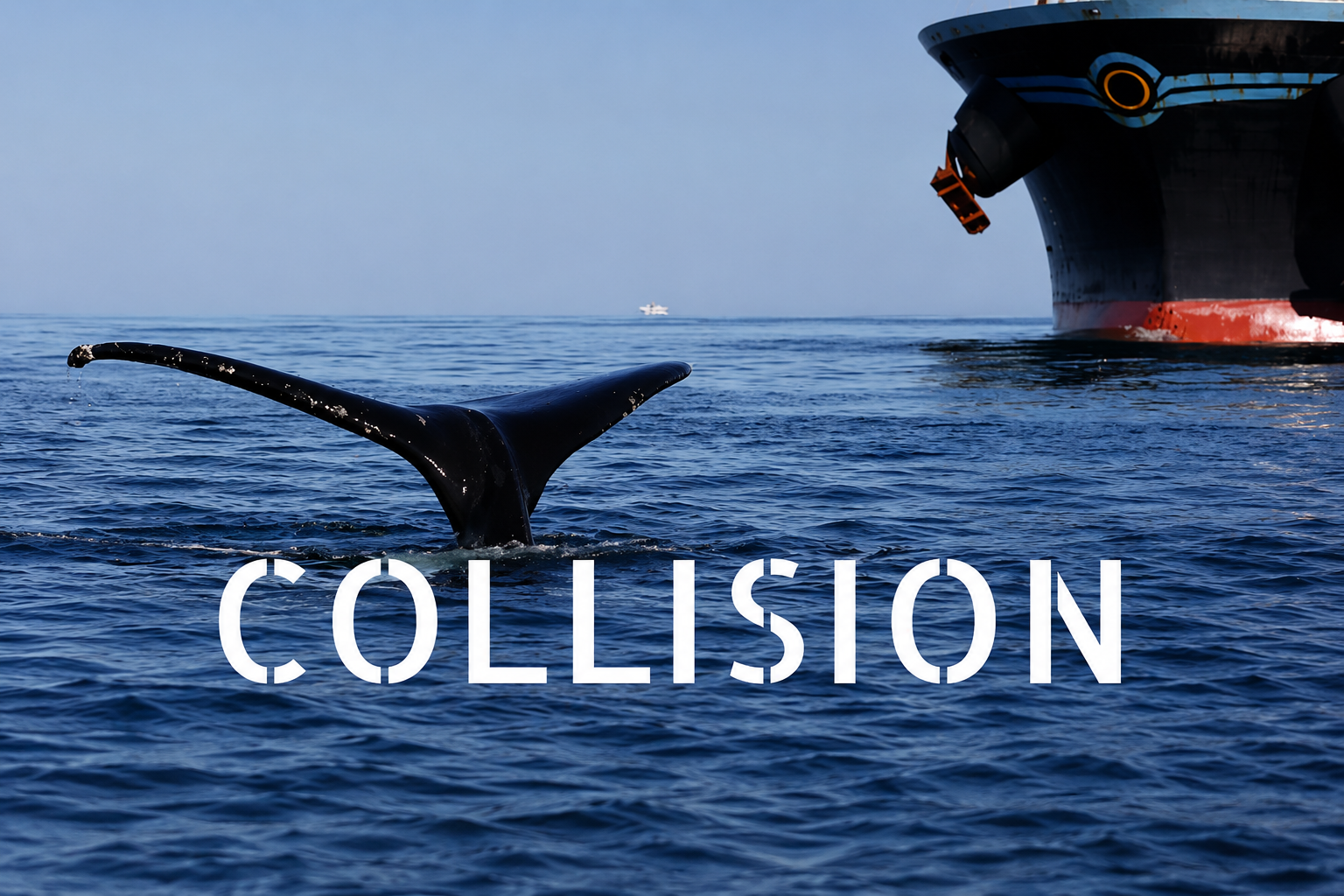
Collision: the invisible toll of ships on the great whales
Every year thousands of great whales are struck and killed by ships, and we see fewer than one in twenty. Collision, premiering on Ecoflix, follows the scientists, sailors and shipping companies proving this is a problem we already know how to solve.
Read feature
The Land That Came Back to Life
On World Environment Day 2026, the most powerful argument for nature-based climate action is not a projection or a policy paper. It is the evidence of what communities have already done — on three continents, with their own hands and their own land.
Read feature