
The Land That Came Back to Life
On World Environment Day 2026, the most powerful argument for nature-based climate action is not a projection or a policy paper. It is the evidence of what communities have already done — on three continents, with their own hands and their own land.
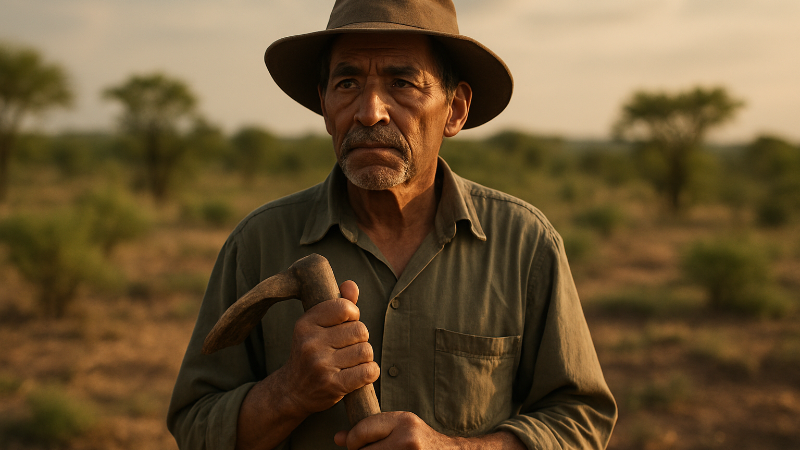
There is a line in Recreate, Restore, Reimagine that holds the argument of this World Environment Day in a few words: "The promise of restoration lives within us." It is a lyric from a film, not a policy document. But it describes something real. The communities who have restored degraded land across China, Africa and Latin America did not wait for the technology to improve or the politics to align. They worked with what existed — soil, seed, water and the accumulated knowledge of people who had lived with that land for generations.
World Environment Day lands this year on a moment of genuine momentum. Ecosystem restoration has moved from the periphery of climate policy to one of its most discussed tools. The evidence base has shifted the debate. Restored landscapes do not simply look better: they fix carbon in vegetation and soil, regulate water cycles that protect communities downstream from flooding and drought, rebuild the biological diversity that underlies long-term resilience, and support the food security of the millions of people who depend on functional land. These outcomes are not projections. They are records.
The communities driving this work across three continents share a common feature: they are the protagonists, not the recipients. On the Loess Plateau, farmers received land use contracts and were paid to terrace, plant and restore. The poverty cycle that had persisted for generations broke within a decade. In similar projects across sub-Saharan Africa and parts of South America, the pattern repeats. Land rights, community ownership of outcomes and the removal of practices that suppress natural regeneration produce results that external interventions alone rarely match. The biodiversity comes back. The water returns. The incomes follow.
On this World Environment Day, the Ecoflix Foundation is part of a global network of more than 65 NGO partners working to protect and restore ecosystems across every continent. One hundred per cent of donations made through the platform go directly to those partners. No administrative overhead is withheld. The money reaches the field. That model reflects the same logic that made the Loess Plateau restoration work: direct investment in the people and communities doing the actual work, not in the systems that surround them.
The case for nature-based climate solutions is now beyond reasonable dispute. What Recreate, Restore, Reimagine documents is not the argument for action. It is the evidence of action already taken and the invitation to join what is already under way. The cycle of degradation that seemed irreversible, on the Loess Plateau and in dozens of other places, has been interrupted. The regeneration the film describes is not metaphor. It is measurable, documented and repeatable. The question facing this World Environment Day is simply whether we choose to scale it.
Support the Ecoflix Foundation and its NGO partners. Every donation goes directly to the field. Join at watch.ecoflix.com
First published in the Ecoflix newsroom.
More in Ecoflix Impact
When Fishing Communities Defend the Ocean
The strongest evidence that marine protection works is not found in policy documents. It comes from the fishing communities, enforcement networks and NGO partnerships where illegal fishing has been met, and turned back. Neptune's Pirates is one of those stories.
Read feature
Why Beavers Are Already Doing the Job Policy Hasn’t
Beaver reintroductions in Britain have moved faster than legislation, faster than expectation, and produced measurable ecological change in a handful of years. The evidence is now harder to ignore than the politics around it.
Read feature
The Species That Came Back From the Edge
Endangered Species Day is not only a reckoning with what is being lost. It is a record of what has been saved — and the evidence from the field is more encouraging than the headlines suggest, provided the intervention comes early enough.
Read feature