
Building the World’s Largest Highway Wildlife Crossing
With Earth Day approaching, the world’s largest highway wildlife crossing above Los Angeles shows what conservation partnerships can actually produce when the evidence and the institutions align.

Earth Day arrives next Wednesday, and across the world the conversation will turn, once again, to what nature needs.
In the Santa Monica Mountains above Los Angeles, one answer to that question has already been built: the Wallis Annenberg Wildlife Crossing, a broad vegetated bridge spanning the freeway at Liberty Canyon, designed to restore movement between mountain ranges that decades of expanding road infrastructure had progressively cut apart. It is the largest highway wildlife crossing in the world, and it is the product of a partnership model that serves as a working template for what conservation collaboration can produce when the evidence, the institutions and the community attention are in place.
The science behind the crossing is straightforward and, once stated, difficult to argue with. Freeways isolate habitat. When populations of wide-ranging mammals cannot move between patches of land, they cannot exchange genetic material. Researchers studying the mountain lion populations of the Santa Monica Mountains found that the animals were not simply having difficulty crossing the road. They were genetically collapsing toward a point of inbreeding themselves out of existence.
The crossing addresses that directly: a structure designed to carry soil, native plants and the full complement of animals that need to move between mountain ranges. From Canada’s Banff National Park to Montana, similar wildlife crossings have already demonstrated that animals use them readily and that vehicle collision rates fall sharply as a result. The model is proven. What the Los Angeles project adds is scale and institutional ambition.
What makes the Los Angeles story worth paying attention to is not only the infrastructure. It is the community of people who built the case for it, a story that rarely features in documentaries about wildlife focused on pristine wilderness or single dramatic species events. The core team for the crossing brought together Caltrans, the National Park Service, the Santa Monica Mountains Conservancy and the National Wildlife Federation as formal partners – a public-private model that has since leveraged support nationally and internationally.
But the broader constituency for the project included trail camera operators, local advocates and storytellers who spent years producing evidence that the mountains were occupied, that the animals were under pressure and that the public cared about both facts. Robert Martinez, whose decade of trail camera work in the Angeles National Forest had produced footage used by the US Forest Service for a public awareness campaign at Los Angeles International Airport, represents that strand of conservation advocacy: unglamorous, persistent and, it turned out, consequential.
Governor Gavin Newsom’s personal connection to mountain lion conservation runs deeper than political support for the crossing. His father, Judge Newsom, was a founder of both the Wildlife Conservancy and the Mountain Lion Fund, and took his son into the field as a child to photograph and collar mountain lions in the California hills. That lineage matters because it reflects a pattern that appears consistently across the most effective conservation partnerships: the people driving change tend to be those with long personal investment in a specific landscape or species, not those responding to a single news event.
California recently passed legislation banning the use of rodenticides – a leading cause of death in mountain lions, hawks, coyotes and other predators that feed on rodents – as a direct result of sustained multi-year campaigning rather than crisis response. The crossing and the legislation are related achievements, built on the same accumulation of public and scientific attention.
Wildlife on the Edge follows this territory and the people working within it, from the trail camera corridors where Robert Martinez has been documenting behaviour for more than a decade to the broader story of what P-22’s life and death catalysed in terms of public investment. It is a film that understands the difference between the problem and the response – and that gives the response the time it deserves. With Earth Day approaching, that distinction is the one worth holding on to.
The Wallis Annenberg Wildlife Crossing is not a finished conservation story. Its builders describe it explicitly as a beginning – more crossings are needed across more freeways if the genetic health of the mountain lion populations of Southern California is to be secured. But it demonstrates something important: that when scientific evidence, community advocacy and institutional commitment are brought together around a specific and tractable problem, conservation produces results. That is a more useful Earth Day message than most.
Stream Wildlife on the Edge and support the work of our conservation partners
External Links
Santa Monica Mountains Conservancy
National Wildlife Federation
First published in the Ecoflix newsroom.
More in Wildlife
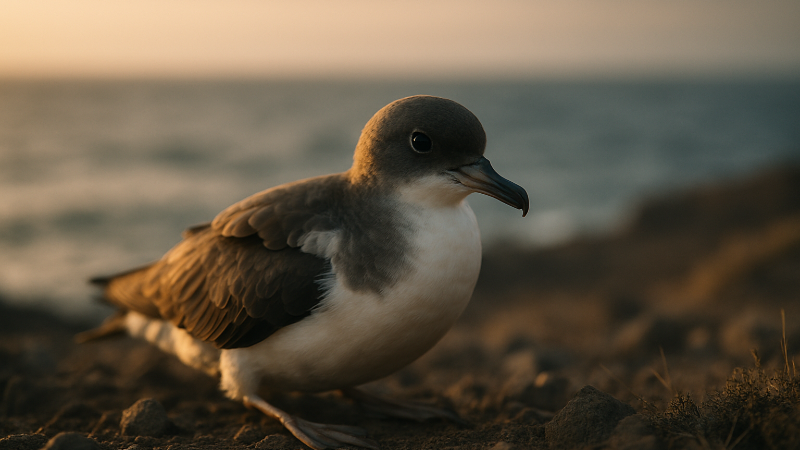
What Happens When the Lights Come On at Sea
Seabirds are declining faster than almost any other bird group on the planet. The reasons are varied, the solutions less so — and a single night rescue operation on Madeira shows exactly how much ground we have already lost, and how little it takes to stop losing more.
Read feature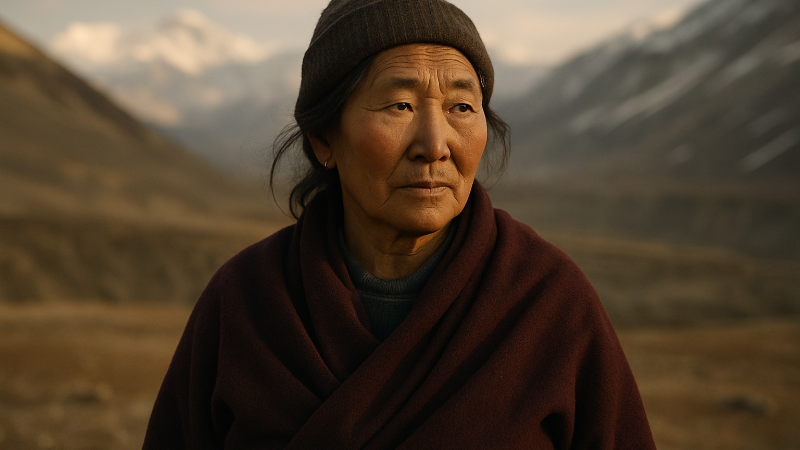
What Two Women in Kibber Taught the World About Living with Snow Leopards
At more than 4,000 metres in the Spiti Valley, Dolma and Chodon have helped turn a village of leopard-wary herders into a community that now reports seeing more snow leopards than it did twenty years ago. The model behind that change is worth understanding in full.
Read feature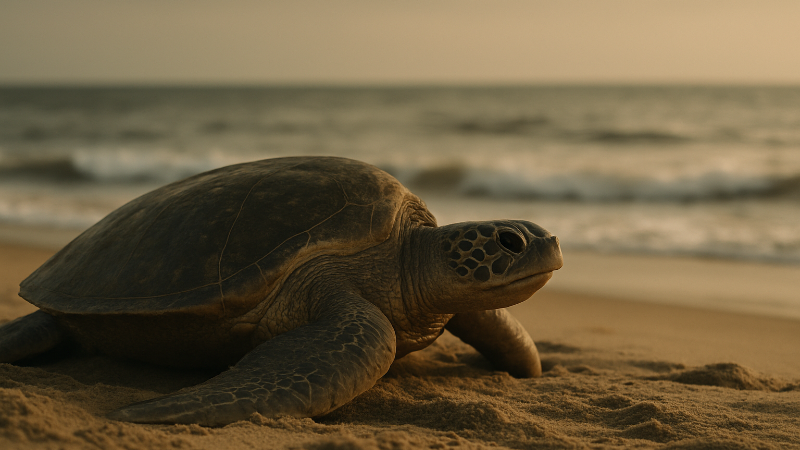
Why Sea Turtles Are Still Losing Ground
Sea turtles have outlasted mass extinctions, ice ages and the rise of every modern predator. What they have not yet outlasted is the ocean as it exists today — and World Turtle Day is a sharp reminder of what hangs in the balance.
Read feature