Why World Civet Day 2026 Is More Than an Awareness Campaign
World Civet Day 2026 directs all donations to the Civet One Health programme. Here is what that field research does, and why it matters beyond the animals.

World Civet Day falls this April with a particular focus.
For the Civet Project, which established the annual event as part of its broader effort to build public awareness of Viverridae conservation, this year’s theme “Healthy Civets, Healthy Planet” is not a slogan so much as a summary of a body of research. Every donation raised on World Civet Day 2026 goes directly to the Civet One Health programme: a multi-year field operation working across Southeast Asia that is simultaneously mapping civet population health, documenting wildlife trade routes and generating epidemiological data that feeds into both national policy discussions and international conservation frameworks.
What distinguishes the Civet One Health programme from conventional species conservation work is its explicit integration of human and animal health objectives.
Field teams do not conduct population surveys and then pass results to a separate health team; the research streams run in parallel from the same field sites, producing data that informs both conservation assessments and zoonotic risk evaluations simultaneously. In the Mekong region, where wildlife trade infrastructure and human communities exist in particularly close proximity, that integration is not a methodological preference. It is a scientific necessity.
The programme’s field outputs are concrete. Population baseline surveys have produced range data for several civet species that previously did not exist at useful resolution, contributing to updated conservation assessments and providing the geographic specificity that regulatory bodies require before protective measures can be formally argued for. Community health protocols, developed alongside the people most directly affected by wildlife-trade proximity, have established practical frameworks for reducing human-animal contact risk that can be adapted across different regional contexts.
Peer-reviewed research produced by the programme is being cited in international policy submissions on wildlife trade reform, making the field science visible at the level where structural change can occur.
Underpinning this work is the Ecoflix Foundation’s partnership with the Civet Project, which operates within a model that applies across all 65 of its NGO partners. One hundred per cent of donations made through Ecoflix go directly to those partners, with no platform fees retained and no administrative deductions applied.
For the Civet One Health programme specifically, this means that contributions made during World Civet Day reach the field operation intact. The transparency of that model is part of what makes the Ecoflix Foundation partnership meaningful for organizations conducting rigorous, under-resourced science in regions that attract limited philanthropic attention.
Civet Coffee: From Rare to Reckless is the film that anchors this work in practice. It is, by any measure, among the best animal documentaries streaming on a conservation-focused platform: a production that follows field scientists in the field, documents conditions at captive-production facilities and connects a familiar consumer product to consequences that stretch from animal welfare to public health risk. For those searching for the best new nature documentaries that take science, rather than spectacle, as their primary subject, it provides a direct entry point into what the Civet Project is actually doing and why it matters.
The Civet Project is building something long-term: an evidence base for a family of animals that conservation has largely passed over, connected to a human health argument that gives that evidence urgency. World Civet Day 2026 is one moment in that longer effort. Donations made this April go directly to field teams operating in the places where the gap between what is known and what is being acted on remains widest. Watch the difference you make.
Support the Ecoflix Foundation and its NGO partners. Every donation goes directly to the field.
Join the Ecoflix community and watch Civet Coffee: From Rare to Reckless at watch.ecoflix.com
External Links
The Civet Project
World Health Organization One Health
EcoHealth Alliance
First published in the Ecoflix newsroom.
More in Ecoflix Impact
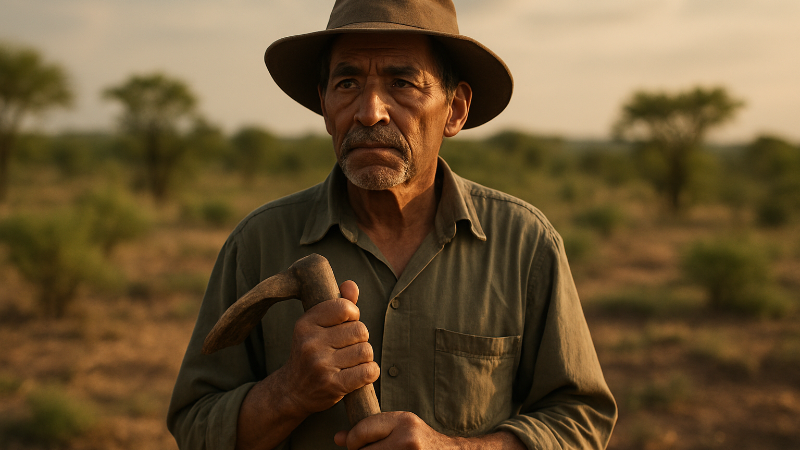
The Land That Came Back to Life
On World Environment Day 2026, the most powerful argument for nature-based climate action is not a projection or a policy paper. It is the evidence of what communities have already done — on three continents, with their own hands and their own land.
Read feature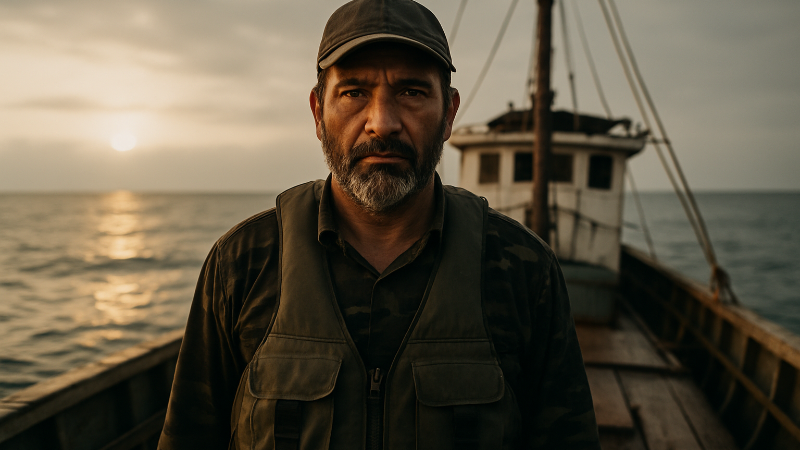
When Fishing Communities Defend the Ocean
The strongest evidence that marine protection works is not found in policy documents. It comes from the fishing communities, enforcement networks and NGO partnerships where illegal fishing has been met, and turned back. Neptune's Pirates is one of those stories.
Read feature
Why Beavers Are Already Doing the Job Policy Hasn’t
Beaver reintroductions in Britain have moved faster than legislation, faster than expectation, and produced measurable ecological change in a handful of years. The evidence is now harder to ignore than the politics around it.
Read feature