
How Chimpanzee Research Transformed How We See Humans
Chimpanzees share 98 per cent of our DNA, use tools and form lasting social bonds. Understanding their decline means understanding what we stand to lose.

In 1960, a young woman arrived at Gombe Stream in Tanzania carrying a notebook and a pair of binoculars. Jane Goodall had been sent into the field by the paleoanthropologist Louis Leakey, who reasoned that studying the behaviour of living great apes might illuminate something of the shared evolutionary past he spent his career excavating from the ground.
What she found there, watching a chimpanzee she named David Greybeard strip leaves from a grass stem and probe a termite mound, forced a revision of one of science’s most settled assumptions.
Tools had always been what separated humans from every other species. Now, they no longer were.
Chimpanzees share approximately 98 per cent of their DNA with humans – a genetic proximity greater than that between chimpanzees and gorillas. That figure alone should be arresting. The behavioural evidence assembled across six decades of field research makes it more so.
Chimps grieve. They form long-term bonds between mothers and offspring that can last a lifetime. They navigate political hierarchies, form coalitions and demonstrate a capacity for consolation that researchers have struggled to explain without recourse to the language of empathy. They pass knowledge between generations in patterns that bear a closer resemblance to culture than to instinct. These are not anthropomorphic interpretations imposed from outside.
They are the conclusions of rigorous, longitudinal study carried out at Gombe and at field sites across sub-Saharan Africa. Jane Goodall – Reasons For Good Hope, which collects Goodall’s own accounts of this work and its aftermath, captures the weight of what six decades at the frontier of primatology actually established.
What is less widely understood is the ecological significance of chimpanzees within the forest systems they inhabit. As seed dispersers, they play a structural role in forest regeneration that extends far beyond the interests of the species itself. A forest from which chimpanzees have been removed does not simply lose a charismatic animal. It loses a functional component. The decline of great ape populations – chimpanzees are listed as Endangered by the IUCN – means the degradation of ecological processes that sustain the forest architecture of a vast belt of sub-Saharan Africa.
Forest loss and chimpanzee decline are not parallel crises running side by side. They are the same crisis at different scales.
The pressures driving that decline are not obscure. Habitat destruction removes the forest entirely. The bushmeat trade takes adults directly. The illegal wildlife trade takes their young, frequently by killing mothers first – infant chimpanzees trafficked to overseas markets for the pet and entertainment trades represent a loss that operates at both the individual and the population level.
Disease, including the transmission of zoonotic pathogens at the boundary between human settlements and forest habitat, adds a further pressure that received sustained attention from Goodall in her final years of advocacy. In her assessment, understanding these connections – between habitat, primate health and human vulnerability – was not sentiment. It was epidemiology.
The case for chimpanzees does not require an emotional argument to be a compelling one. It requires only clarity about what is at stake: a species that carries in its behaviour and biology the most legible window we have into our own evolutionary origins, a keystone role in forest systems that no replacement species can replicate and a trajectory, without intervention, that points unmistakably toward the kind of loss that is not reversible.
The researchers, sanctuary workers and conservation organizations working across the chimpanzee’s range understand this. The question is whether enough attention and resource reaches them in time for the understanding to count.
Join the Ecoflix community and watch Jane Goodall – Reasons For Good Hope
External Links
IUCN Red List of Threatened Species
Jane Goodall Institute
First published in the Ecoflix newsroom.
More in Wildlife
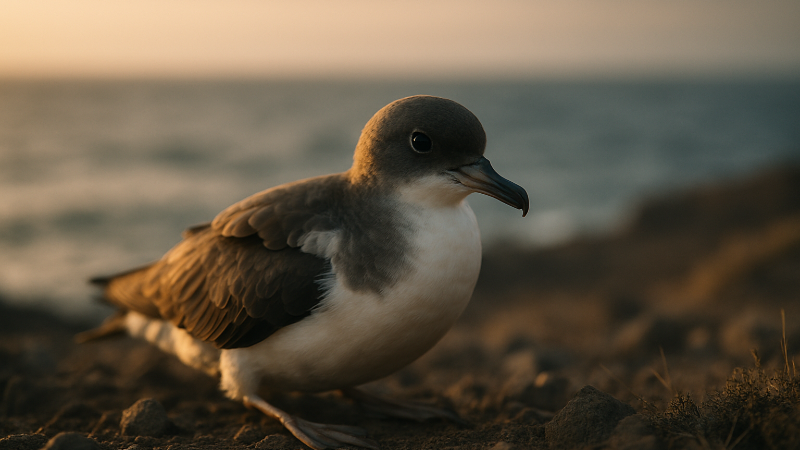
What Happens When the Lights Come On at Sea
Seabirds are declining faster than almost any other bird group on the planet. The reasons are varied, the solutions less so — and a single night rescue operation on Madeira shows exactly how much ground we have already lost, and how little it takes to stop losing more.
Read feature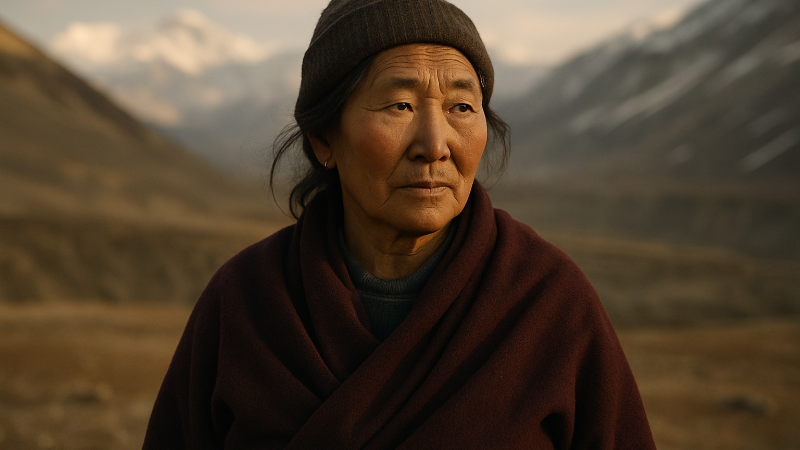
What Two Women in Kibber Taught the World About Living with Snow Leopards
At more than 4,000 metres in the Spiti Valley, Dolma and Chodon have helped turn a village of leopard-wary herders into a community that now reports seeing more snow leopards than it did twenty years ago. The model behind that change is worth understanding in full.
Read feature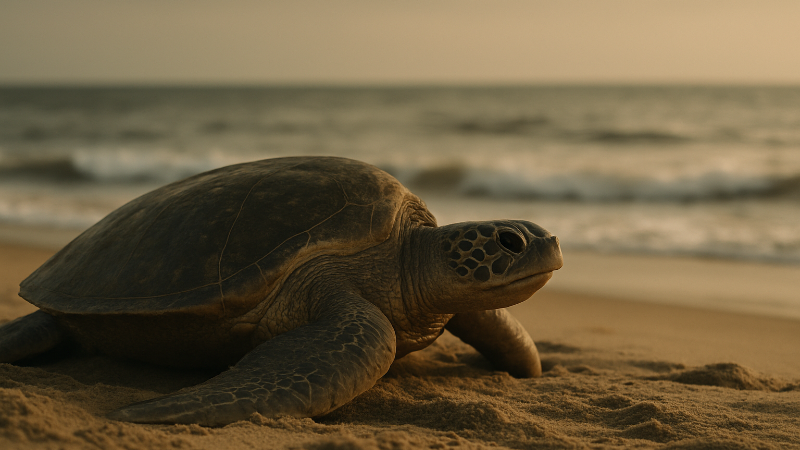
Why Sea Turtles Are Still Losing Ground
Sea turtles have outlasted mass extinctions, ice ages and the rise of every modern predator. What they have not yet outlasted is the ocean as it exists today — and World Turtle Day is a sharp reminder of what hangs in the balance.
Read feature